Noise Algorithms
Noise Value FBM Curl 3D
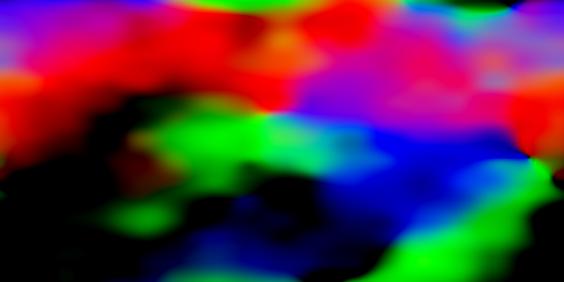
Divergence-free 3D FBM curl vector fields driving incompressible GPU vortex trajectories.
Curl Noise 3D evaluates the continuous cross-product of a volumetric noise field, guaranteeing a completely divergence-free spatial flow. To bring this profound physical reality to the web, STD.DEV executes a highly performant vector calculus operator directly on the GPU. By instantaneously deriving the rotational curl across a complex 3D FBM field, STD.DEV transcends basic noise to simulate true, uncompressible fluid dynamics—generating perfect, continuously swirling vortex fields without ever dropping a frame. Furthermore, the generated noise is seamlessly tileable across infinite coordinate spaces.
Uncompressible Kinetic Flow
Fluid dynamics must remain physically unbroken, even when disrupted. Integrated deeply into the STD.DEV architecture, hardware inputs like a live camera feed or a touchscreen swipe act as physical rotational forces within the curl field. If a user sweeps their finger across the digital volume, their kinetic interaction injects local vorticity into the field, instantly triggering cascading, swirling vortex streams that bend and wrap perfectly without ever intersecting or compressing. This creates an incredibly fun, deeply reactive uncompressible fluid environment.
Generative AI Diffusion Guidance
The uncompressible, divergence-free nature of Curl Noise introduces a radically unique method for generative AI control. By extracting the continuous, swirling flow vectors, STD.DEV generates highly sophisticated, non-intersecting optical flow maps. When applied as a structural mask within an AI video pipeline, these maps instruct the diffusion model on exactly how to shift and swirl visual mass. STD.DEV dictates this uncompressible logic, forcing the AI to generate deep cosmic gas clouds and fluid simulations that natively reflect flawless, unbroken rotational physics.
How does Curl Noise 3D ensure a divergence-free spatial flow?
Curl Noise 3D guarantees a completely divergence-free spatial flow by evaluating the continuous cross-product of a volumetric noise field.
What technique does STD.DEV use to bring curl noise to the web?
How does STD.DEV simulate uncompressible fluid dynamics?
What makes the generated noise seamlessly tileable?
How do hardware inputs like a live camera feed affect the curl field?
What happens when a user sweeps their finger across the digital volume?
What unique method does Curl Noise introduce for generative AI control?
How are the generated optical flow maps used in an AI video pipeline?
What is the business value of simulating uncompressible fluid dynamics?
How does STD.DEV ensure the fluid dynamics remain physically unbroken?
What is the philosophical approach to simulating fluid dynamics with Curl Noise 3D?
How does STD.DEV leverage generative AI for visual effects?