Noise Algorithms
Noise Gradient 3D
Volumetric 3D PCG vector hashing and GPU interpolation for atmospheric density fields.
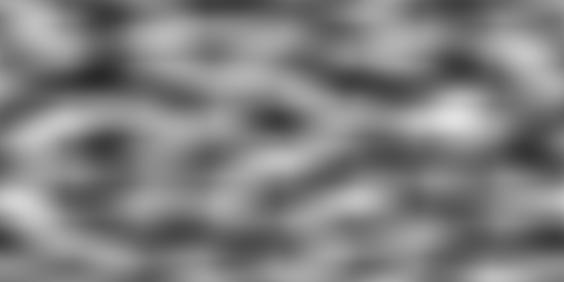
Extending procedural continuity directly into volumetric space yields seamless, three-dimensional pseudo-random fields. To harness this immense computational complexity for deep creative expression, STD.DEV executes a highly optimized, 3D PCG hashing and interpolation algorithm directly on the GPU. By instantaneously calculating continuous vectors across the X, Y, and Z axes, STD.DEV generates breathtaking, seamless volumetric clouds, fog densities, and dynamic solid textures without sacrificing rendering performance. Furthermore, the generated noise is seamlessly tileable across infinite coordinate spaces.
Volumetric Intersection
A truly immersive 3D environment demands that users can physically interact with volumetric data. Integrated seamlessly into the STD.DEV architecture, hardware inputs like a spatial hand tracker or a touchscreen swipe act as dimensional slicing tools. As a user intersects the digital volume, their kinetic interaction slices through the 3D gradient field, revealing the continuous noise structures hidden inside. This allows users to physically carve and explore infinite mathematical clouds, turning complex algorithms into a highly engaging volumetric sandbox.
Generative AI Diffusion Guidance
Volumetric continuity is notoriously difficult for traditional AI to maintain. To solve this, STD.DEV uses the raw, perfectly continuous 3D slice maps generated by the Gradient 3D algorithm as absolute structural boundaries for generative video pipelines. By mapping the exact density gradients into the AI's conditioning layers, STD.DEV dictates the depth and volumetric structure of the output. This forces the AI to build its visuals along mathematically verified 3D flows, generating deep space nebulas or atmospheric fog that perfectly adhere to true volumetric physics.
How does STD.DEV generate 3D noise fields?
STD.DEV generates 3D noise fields by executing a highly optimized, 3D PCG hashing and interpolation algorithm directly on the GPU, instantaneously calculating continuous vectors across the X, Y, and Z axes.
What hardware inputs can be used to interact with volumetric data in STD.DEV?
How does STD.DEV ensure generative AI maintains volumetric continuity?
What are the benefits of STD.DEV's 3D PCG hashing and interpolation algorithm?
How does user interaction with the digital volume work in STD.DEV?
What is the purpose of mapping density gradients into the AI's conditioning layers in STD.DEV?
What creative applications are enabled by STD.DEV's 3D noise generation?
What is the advantage of STD.DEV's noise being seamlessly tileable?
How does STD.DEV transform complex algorithms into an engaging experience?
Why is volumetric continuity challenging for traditional AI?